
What are warehousing and bonded storage services?
Warehousing keeps goods safe, recorded and ready to ship in the gap between production and delivery. In international trade that gap usually has to be planned together with the goods’ customs status: imports on which duties have not been paid are held in a bonded warehouse, while goods already in free circulation, or being prepared for export, are kept in non-bonded storage.
We treat storage as part of the transport chain. With our 20,000 m² of warehouse space, our groupage and full-truckload network and our customs coordination, your cargo is managed by one point of contact from the moment it arrives until it is dispatched.
When do you need warehousing or a bonded warehouse?
- Breaking down imports: splitting a single import consignment and sending it on to customers or production in smaller lots as needed
- Export consolidation: combining goods collected from different suppliers into one groupage or full-load shipment
- Seasonal stock: building stock ahead of peak selling periods and dispatching it as demand comes in
- Exhibition and project material: interim storage until the event or installation date, suited to the size and nature of the cargo; see our project and exhibition cargo service
Bonded warehouse or non-bonded storage?
| Feature | Bonded warehouse | Non-bonded storage |
|---|---|---|
| Status of the goods | Under customs control; duties not yet paid | In free circulation or being prepared for export |
| Duties and taxes | Deferred until release for free circulation; no import duty arises if the goods are re-exported | Customs formalities already completed |
| Typical use | Imports awaiting documents or permits, partial releases, transit (merchanting) trade | Stock holding, distribution, order preparation, export consolidation |
| Movements in and out | Customs warehousing declaration and customs records | Warehouse records and dispatch documents |
Why use a bonded warehouse?
- Deferred duty: customs duty and VAT are paid when the goods are released for free circulation, which eases your cash flow.
- Partial releases: stock can be released in batches as and when you need it.
- Transit trade and re-export: flexibility for goods that will be sold on to third countries without ever being released for free circulation in Türkiye (Turkey).
- Waiting for documents or permits: goods are held securely until missing documents or permits are in place.
- Usual forms of handling: where customs allows, operations such as repacking, labelling and sorting can be carried out in the warehouse.
Bonded warehousing is governed by customs rules. We plan the declarations and documents needed to place goods in the warehouse and release them for free circulation as part of your customs clearance process.
How does warehousing work?
- Initial information and planning: you share the product type, number of packages or pallets, dimensions and weight, customs status, expected storage period and in/out frequency, and we plan the storage and reporting routine around them.
- Receipt: the incoming vehicle is met and unloaded, and a stock record is opened after quantities and condition are checked. For goods entering bonded storage, the customs records are completed as well.
- Storage and stock control: the goods are stacked to suit their type, every movement in and out is recorded and stock reports are shared regularly.
- Dispatch instruction and preparation: once you give the instruction, the goods are prepared and, where needed, palletised, labelled or combined with other cargo.
- Dispatch: with the necessary customs formalities completed, the goods leave by groupage or full-load road freight, sea, air or intermodal transport.
Contract logistics: from warehouse to dispatch
In contract logistics, storage, stock management and dispatch are handed to one partner under a service contract that sets out the scope and performance measures in advance. We agree the scope with you to fit your business; on top of the core steps above, the contract can include:
- Consolidation: combining cargo from different suppliers into a single shipment
- Value-added handling: palletising, labelling and sorting for dispatch, as required
- Dispatch planning: regular planning of outbound shipments by road, sea, air or intermodal transport
Service and project management: one point of contact, transparent reporting
When storage, customs and transport are split between different companies, responsibility gets split too. With us you have one point of contact for the warehouse, customs coordination and dispatch. We share stock and movement reports regularly and track performance against measures agreed with you, such as on-time dispatch, stock accuracy and damage rates. For long-term or multi-supplier projects, the scope of service, responsibilities and reporting routine are set out in writing at the start.
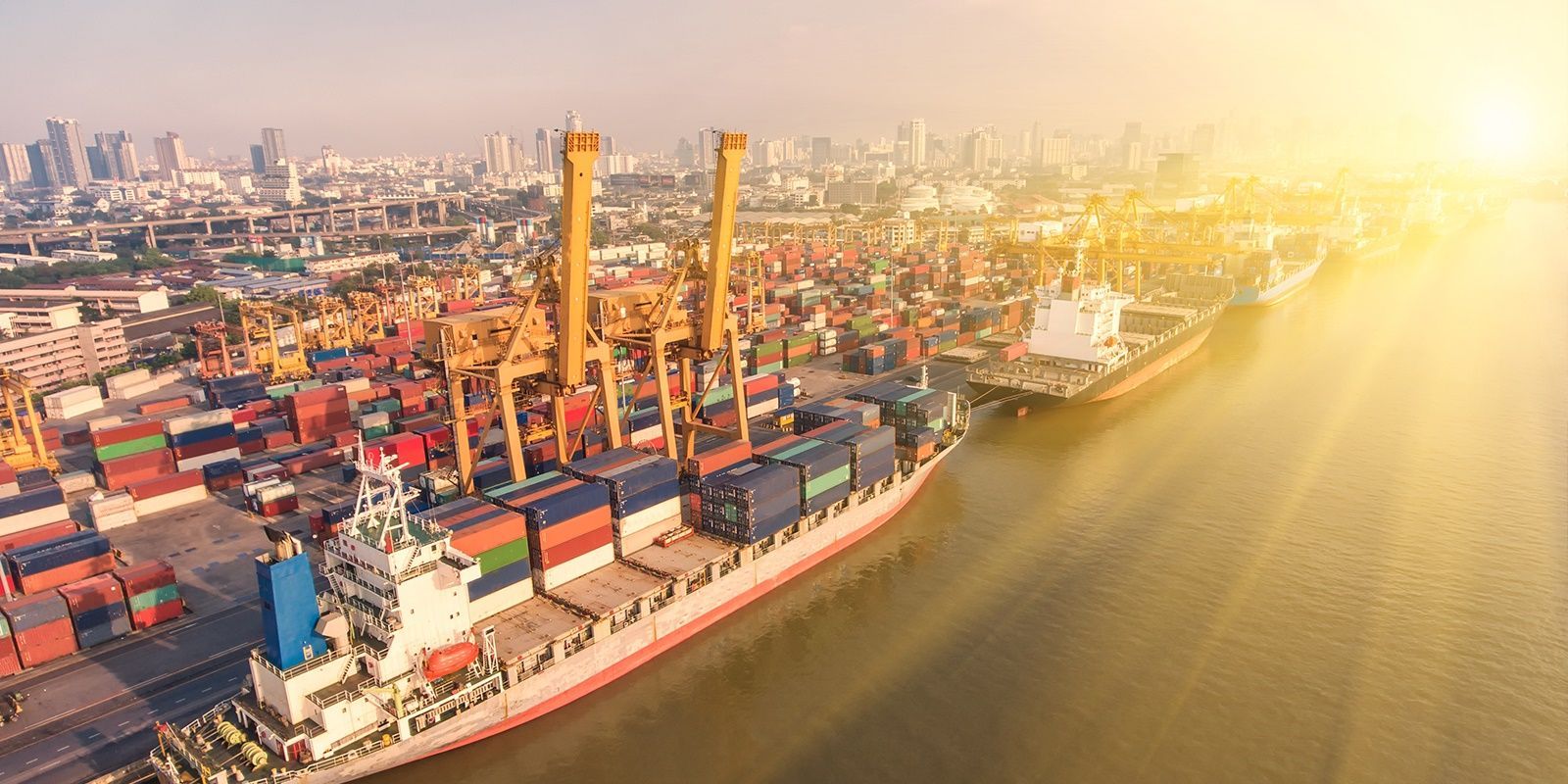
Port and terminal operations
For cargo arriving or leaving by sea, the process starts or ends at the port. At this stage we carry out or coordinate:
- In-port bonded handling: moving, transferring and stacking cargo under customs control within the port area
- Yard operations: loading and unloading in the port and terminal yard, tallying, and damage and seal checks
- Discharge supervision: checking the quantity and condition of cargo as it comes off the vessel, with a report and photographs where needed
- Terminal coordination: terminal appointments, customs inspections, container delivery and return, and planning the onward road connection
Moving the cargo from the port to a warehouse, a factory or straight onto the next transport leg is planned from the same operations desk. For more on container shipping, see our sea freight page.
How is the price built up?
Storage is priced on the space used, the time and the work involved. The main factors:
- The storage unit and space: pallet, m² or m³
- The storage period and how fast the stock turns over
- The number and frequency of movements in and out (handling)
- Extra services such as labelling, palletising and consolidation
- Customs status: bonded procedures and declarations
- Special requirements of the product: suitability for dangerous goods, high-value items or special stacking needs is assessed case by case
Why Multitransport?
- 20,000 m² of warehouse space: storage capacity linked to our transport network.
- Warehouse, customs and transport at one desk: one point of contact from bonded storage to dispatch.
- Transparent reporting: regular stock and movement reports and performance tracking.
- Port and terminal coordination: one plan from ship to warehouse and from warehouse to destination.
- Certified processes: ISO 9001, ISO 14001, ISO 27001 and ISO 45001 management system certificates.