
What is intermodal transport?
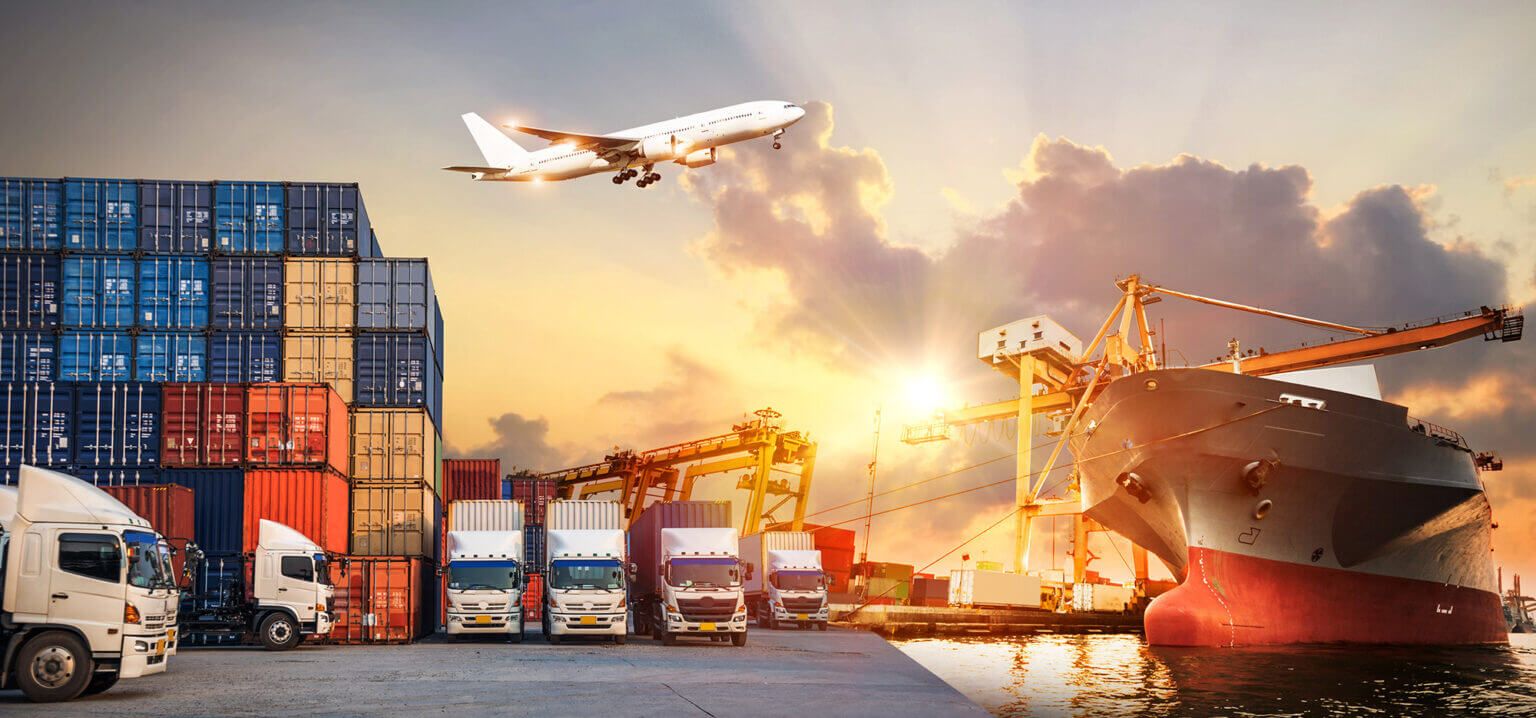
Intermodal transport moves cargo in one and the same loading unit — a container, a semi-trailer or a swap body — using two or more modes of transport in succession. When the mode changes, only the loading unit is transferred, by crane, by ramp or by driving it onto a Ro-Ro ship; the goods themselves are never handled. That means less risk of damage or loss, and faster transfers.
You will also come across the terms “combined transport” and “multimodal transport”. Combined transport is intermodal transport in which most of the journey is by rail or sea and the road freight legs are kept as short as possible. Multimodal transport is the broader term for any carriage by at least two different modes.
Which mode combinations are used?
The right combination depends on the origin and destination, the type of cargo, the delivery date and the current sailing and train options. Common examples:
| Combination | How it works | When it makes sense |
|---|---|---|
| Road + Ro-Ro | The trailer sails with its tractor or unaccompanied, then continues by road from the port of arrival | On lanes between Türkiye (Turkey) and Europe, and to destinations such as Great Britain, Ireland and Scandinavia where ferry links are widely used |
| Road + rail | A trailer, container or swap body covers the trunk distance by train; the first and last legs are by lorry | Long-distance, regular and heavy loads |
| Container (sea) + lorry | The container travels port to port by ship and port to door by lorry | Intercontinental and high-volume shipments |
| Sea + rail + road | A trailer or container arriving by sea continues inland by train, then by lorry to the consignee | Long corridors where the destination is far from the port |
Towards the Turkic republics, routes that combine rail, sea and road — such as the Middle Corridor across the Caspian Sea — are also among the options. We confirm which links can be used, based on current sailings and capacity, at the quote stage.
The benefits of intermodal transport
- Lower cost: over long distances, rail and sea legs can be cheaper per tonne, and fuel, toll and driver costs fall.
- Lower emissions: rail and sea generally emit less carbon per tonne-kilometre than road, which supports your supply chain’s carbon targets.
- A way round road restrictions: far less exposure to drivers’ working and rest-time rules, weekend lorry bans, transit permit quotas and border queues.
- Capacity for heavy, regular loads: trains and ships offer stable capacity for planned, recurring shipments.
- Cargo security: because the goods stay in the same unit throughout, there is less risk of handling damage at transfers.
Which loads suit intermodal transport?
Intermodal pays off most over long distances, where the delivery date can be planned ahead:
- Regular, recurring shipments: weekly or monthly production runs that can be planned around sailing and train schedules
- Long-distance full loads: trailer and container loads to distant destinations such as Western and Northern Europe, Great Britain or Central Asia
- Loads where the delivery hour is not critical: shipments with a few days’ flexibility, tied to a stock or project plan
- Supply chains with carbon targets: companies that want to cut the emissions from their transport
That said, intermodal is not the right answer for every load. Over short distances, or when hours matter, a direct full truckload or an express solution is usually faster.
One lane, one party responsible: how it works
In a chain where different modes run with different carriers, the transfer points are where things tend to go wrong. We stay responsible at those points too:
- Planning: we compare mode combinations and sailing and train options against the origin, destination, cargo type and delivery date.
- First leg: the cargo is collected from your premises by our own tractor fleet or our partners and taken to the terminal or port.
- Trunk leg: the loading unit covers the main distance by ship or train; bookings, cut-off times and transfers are monitored from our operations desk.
- Last leg and delivery: the cargo is collected from the destination terminal and delivered to the consignee by road.
- Documents and customs: the export declaration, transit documents and destination requirements are planned in advance for every leg.
How is the price built up?
An intermodal rate is not a single line but the sum of its legs. The main factors:
- The route and number of legs; the length of the sea or rail leg
- The loading unit: container type, semi-trailer or swap body; accompanied or unaccompanied Ro-Ro
- Cargo weight and volume
- Terminal, port and handling charges
- Road distances on the first and last legs
- Customs and transit formalities; season and available capacity
Documents and customs
The document set depends on the modes on the route. Where a loaded trailer travels by ship or train without its cargo being unloaded, the whole journey usually runs under a CMR consignment note; a container sea leg uses a bill of lading (B/L), and a rail leg a CIM or, depending on the route, SMGS consignment note. The export declaration, a T1 transit declaration where needed, and any certificates of origin or movement certificates the destination requires (such as an A.TR or EUR.1) are prepared before loading. For more detail, see our customs clearance and sea freight pages.
Why Multitransport?
- Four modes, one operations desk: road, sea, air and intermodal options are planned by the same team, and we choose the best combination with you.
- Our own tractor fleet: running our own trucks gives us flexibility in planning the first and last legs.
- One party responsible at every transfer: we follow terminal and port transfers so you do not have to.
- Environmental management: within our ISO 14001-certified environmental management system, we put lower-emission combinations forward wherever they fit.
- A wide lane network: scheduled departures to 54 countries in 8 regions plus an agency network.