
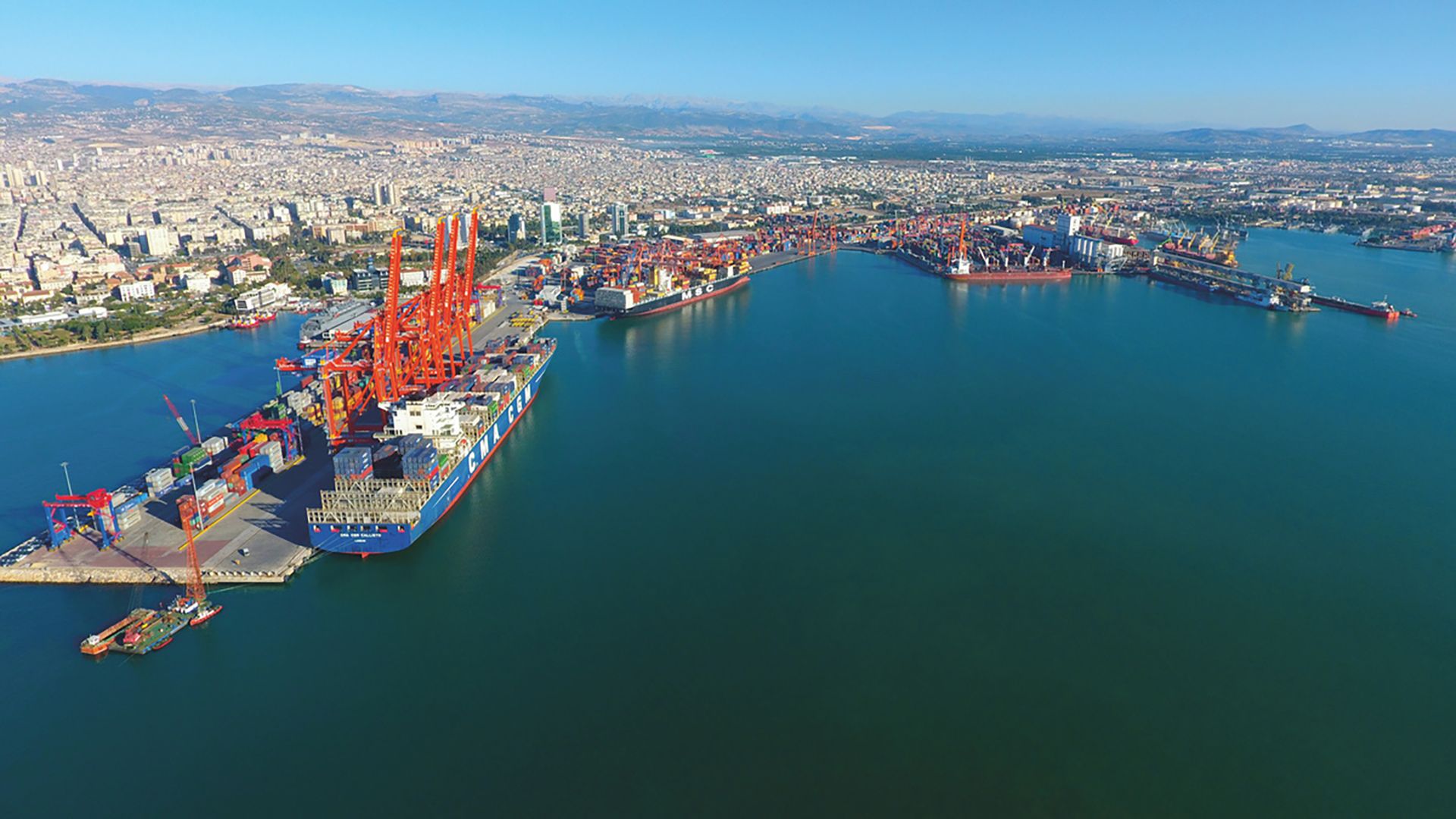
What is sea freight?
Sea freight moves cargo from port to port on container ships; add haulage to the port and delivery at destination, and it becomes a door-to-door service. Its low cost per unit makes it the most economical option for large, heavy or long-distance shipments in most cases, although transit times are usually longer than by road or air.
We ship FCL and LCL cargo, import and export, on weekly scheduled sailings, and our agency network reaches ports worldwide. For cargo leaving the Aegean region, ports such as İzmir Alsancak and Aliağa (Nemrut Bay) are options, depending on where your goods are and which services call there.
FCL or LCL?
| Criterion | FCL (full container load) | LCL (less than container load) |
|---|---|---|
| Use of the container | The whole container is reserved for your cargo | The container is shared with other shippers’ cargo |
| Best for | Cargo that fills a container, or where a full box is still cheaper | A few pallets or a few cubic metres |
| Rate basis | Per container, plus port charges | Volume (m³) or weight, whichever is higher (W/M) |
| Handling | Sealed at loading, opened at destination | Consolidated and deconsolidated at a container freight station (CFS) |
| Transit time | More predictable | Usually longer, because of consolidation and deconsolidation |
As a rule of thumb, once your cargo fills a good part of a container it is worth pricing FCL and LCL side by side; which one wins depends on the route and on freight levels at the time.
Container and equipment types
| Equipment | What it is for |
|---|---|
| 20’ and 40’ standard (dry) | Palletised and cartoned general cargo |
| 40’ high cube | Light but bulky cargo that needs more internal height than a standard box |
| Reefer | Temperature-controlled cargo such as frozen and chilled food and pharmaceuticals |
| Open Top | Cargo that has to be crane-loaded from above or is too tall for a standard box |
| Flat Rack | Heavy machinery, vehicles and project parts wider or taller than a container |
| ISO Tank | Bulk liquids such as chemicals and food-grade liquids |
For our approach to the cold chain in reefer containers see refrigerated transport; for IMDG requirements when a container holds dangerous goods see ADR and dangerous goods transport.
Heavy and out-of-gauge cargo
Cargo that exceeds container dimensions (out-of-gauge, OOG) or is very heavy can travel on Flat Rack and Open Top equipment, while pieces too large for any container can go on conventional break-bulk vessels. For these loads we collect the dimensions, weight, centre of gravity and lifting points in advance, and agree the lashing plan and the shipping line’s approval before loading. For exhibition and project cargo, see project and exhibition cargo.
How a sea export works
- Quote and booking: we offer rates and sailing options based on the cargo, origin, destination and Incoterms, then make the booking.
- Container and loading: for FCL an empty container comes to your loading address; for LCL your cargo is delivered to the container freight station.
- Customs and VGM: the export declaration is filed and, as SOLAS requires, the container’s verified gross mass (VGM) is submitted to the shipping line.
- Loading and bill of lading: the container is loaded on board and the bill of lading (B/L) is issued.
- Transit and tracking: the sailing and any transhipment ports are followed, and you are kept informed.
- Arrival and delivery: the cargo is cleared through customs at the port of discharge and, on request, delivered to the door.
Imports work the other way round: we coordinate with our agent at the port of loading, then handle the delivery order, customs clearance and delivery from one desk.
Preparing cargo for the sea leg
- Moisture and condensation: temperature swings on a long voyage can cause condensation inside the container, so use suitable packaging and desiccants for moisture-sensitive goods.
- Securing: fill gaps with chocks, ratchet straps or inflatable dunnage bags so the cargo cannot shift inside the container.
- Wood packaging: many countries require wooden pallets and crates to meet ISPM 15, meaning heat-treated and stamped.
- Weight distribution: spread the weight evenly across the container floor and stay within its maximum payload; the declared weight must match the VGM.
How ocean freight rates are built
- Route and service: ports of loading and discharge, direct or transhipment service.
- Container type and number: standard, high cube or special equipment.
- Timing: seasonal peaks and line capacity; ocean freight markets move in cycles.
- Surcharges: line surcharges such as the bunker adjustment factor (BAF), plus terminal handling charges (THC).
- Haulage: getting the container to the port and delivering it at destination.
- Free time: if the container stays at the port or with you beyond the free time, demurrage and detention charges apply.
- Incoterms: terms such as EXW, FOB or CIF decide who pays which costs.
Documents and customs
The core documents for a sea shipment are the bill of lading (B/L), commercial invoice, packing list and export declaration. Depending on the destination you may also need a certificate of origin, an A.TR or EUR.1, and health or conformity certificates for certain products. For declarations and regulation, see our customs clearance service.
Why Multitransport?
- FCL and LCL, import and export: every container option at one desk.
- Weekly scheduled sailings: plannable departures, and destinations worldwide through our agency network.
- Special equipment: Open Top, Flat Rack, Reefer and ISO Tank for heavy and out-of-gauge cargo.
- Port and terminal operations: in-port bonded handling, discharge supervision and terminal coordination.
- The land leg: haulage to the port and delivery at destination, planned by road and through intermodal transport.